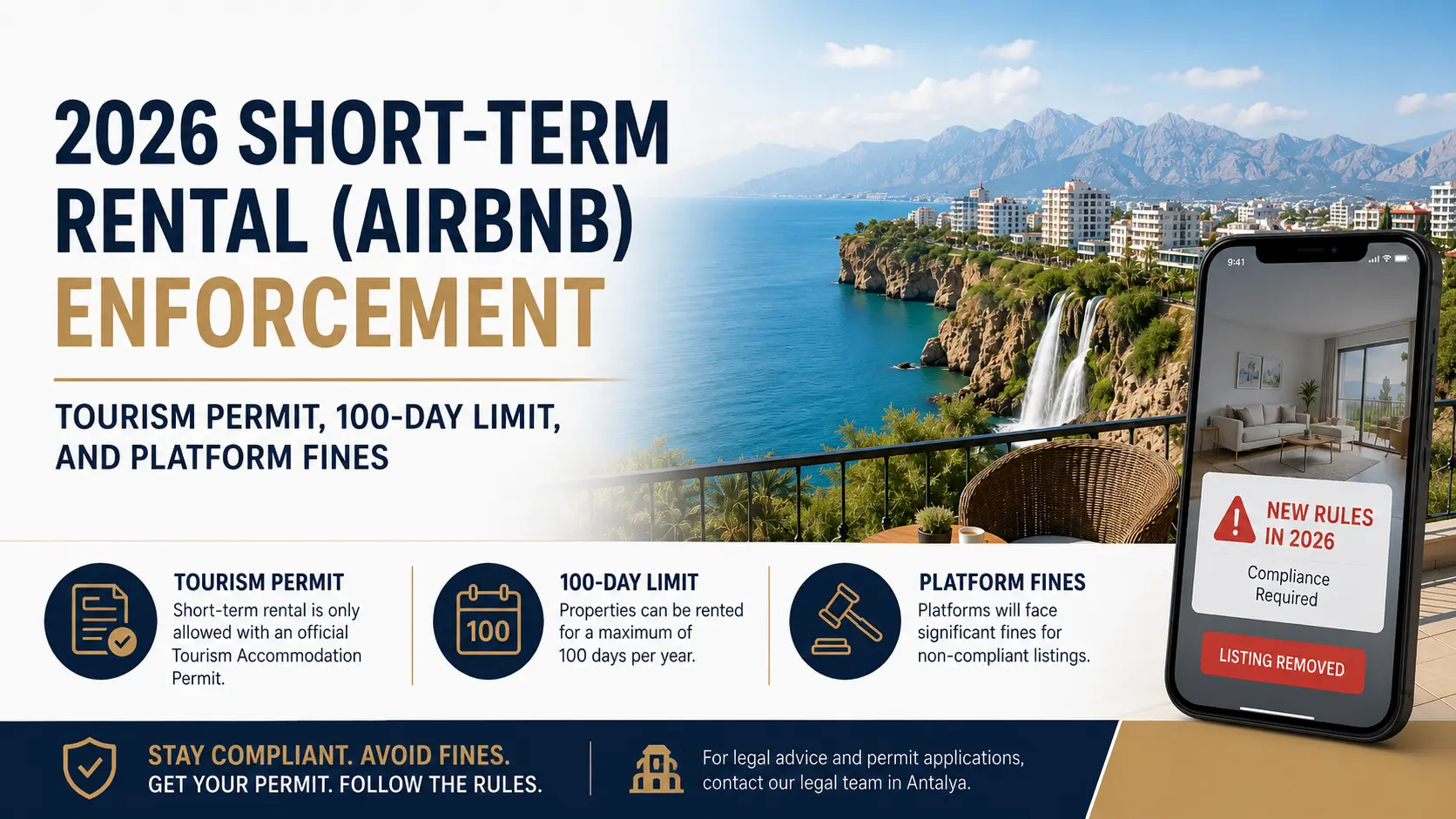
Juridische diensten in Antalya: Handhaving van korte-termijnverhuur (Airbnb) in 2026 — Toeristenvergunning, limiet van 100 dagen en platformboetes
Introduction to Short-Term Rentals in Antalya
Antalya, a stunning coastal city located in Turkey, has become a focal point for tourists from around the globe. With its rich history, breathtaking landscapes, and warm Mediterranean climate, the city has seen a significant rise in the popularity of short-term rentals, particularly through platforms such as Airbnb. This trend not only enhances tourism but also gives rise to new opportunities for property owners, thereby transforming the local real estate market.
The allure of short-term rentals is evident, as visitors often prefer the comfort and homeliness that these accommodations provide compared to traditional hotels. The unique experience of living like a local, combined with competitive pricing, has resulted in a substantial increase in the number of rental properties throughout Antalya. However, this surge in demand has brought several challenges that necessitate regulatory measures to ensure the sustainable growth of the tourism rental sector.
As short-term rentals proliferate, the need for legal services in Antalya has become increasingly apparent. Property owners now must navigate various laws and regulations, including those related to tourism rental permits, which are essential for legal operation. Additionally, the framework surrounding short-term rental law in Turkey is evolving, reflecting the government’s aim to balance tourism growth with community needs.
Consequently, the implementation of effective regulations is crucial for maintaining the integrity of Antalya’s tourism industry while addressing any potential disruptions caused by unregulated rental properties. The city is actively working on establishing clear guidelines to manage short-term rentals, ensuring compliance with existing laws and protecting both visitors and residents alike. Thus, understanding the legal landscape of short-term rentals in Antalya, including the associated legal services, will facilitate a more regulated and sustainable rental environment in the years to come.
The 2026 Short-Term Rental Regulations
As of 2026, the regulations governing short-term rentals in Antalya have undergone significant revisions to ensure that property owners comply with the legal framework established by local authorities. These regulations are crucial for maintaining order within the tourism sector and ensuring the safety and satisfaction of both guests and residents. One of the primary legal stipulations requires property owners to obtain a tourism rental permit, which serves as official recognition of their right to offer accommodations for short-term stays.
Under these regulations, properties must meet specific standards related to safety, hygiene, and customer service. This includes having smoke detectors, fire extinguishers, and clear emergency exit routes to safeguard the interests of guests. Furthermore, the registration process for short-term rentals includes submitting details such as property specifications, owner identification, and proof of compliance with local zoning laws.
Additionally, the 2026 regulations address issues related to noise, waste disposal, and local community impacts. Property owners must adhere to noise control measures to ensure a harmonious relationship with neighboring residents. Local authorities may impose fines or revoke tourism rental permits for properties that repeatedly violate these rules.
Another key aspect of the legal services in Antalya related to short-term rentals is the requirement for owners to pay certain taxes. This accountability not only contributes to the local economy but also ensures that short-term rental operations align with broader fiscal policies in Turkey. As demand for short-term accommodations continues to grow, understanding these legal services and regulations becomes imperative for property owners seeking to navigate the evolving landscape effectively.
Overall, compliance with the 2026 short-term rental regulations is essential for property owners in Antalya to thrive in the competitive market. Awareness and adherence to these legal frameworks will ultimately safeguard their investments and contribute positively to the local tourism industry.
Tourism Permits: What You Need to Know
Entering the short-term rental market in Antalya, or anywhere in Turkey, necessitates awareness of local regulations, especially concerning tourism permits. These permits are essential for legal operation and compliance with the recently established regulations concerning short-term rentals.
The application process for obtaining a tourism rental permit involves several steps. First, property owners must ensure that their property meets specific criteria set by local authorities. This typically includes adherence to safety and health standards, zoning laws, and the regulations pertinent to residential and commercial properties. Upon ensuring compliance, applicants are required to submit a formal application along with necessary documentation, which often includes proof of identity, property ownership documents, and evidence of compliance with the short-term rental laws in Turkey.
The importance of acquiring a tourism rental permit cannot be overstated. Operating a short-term rental without this permit may lead to significant fines or the forced cessation of your rental business. These regulations are enforced to ensure that rentals meet the expectations of guests while simultaneously protecting local communities from the adverse impacts of unregulated rental practices. Furthermore, by obtaining the correct legal services in Antalya, property owners can navigate the application process more efficiently and minimize the likelihood of future compliance issues.
In conclusion, acquiring a tourism rental permit is a crucial step for anyone interested in short-term rentals. Not only does it safeguard the interests of the property owner, but it also ensures that guests have a pleasant stay within the legal framework established for short-term rentals in Turkey.
The 100-Day Rental Limit Explained
The Turkish authorities have established a 100-day rental limit for short-term rentals in Antalya, a measure that is becoming increasingly relevant for property owners and the tourism sector at large. This limit is aimed at regulating the influx of short-term rental properties, ensuring a balanced and sustainable tourism environment in the region. The rationale behind this regulation is multifaceted, as it seeks to address various concerns including housing availability, community impact, and maintaining local culture while also catering to tourism demands.
For property owners, this limit entails a strategic adjustment to their rental strategies. By capping the rental period to 100 days, owners may need to reconsider their pricing models, marketing tactics, and the types of guests they attract. This regulation aims to promote longer-term rentals, thus facilitating better access to housing for local residents and ensuring that the charm of Antalya’s neighborhoods remains intact. Property owners seeking legal services in Antalya can benefit from advice on compliance and maximizing their rental potential.
Moreover, this limit carries implications for the overall tourism market in Antalya. With short-term rentals being a significant aspect of the local economy, limiting rental days could impact tourism revenues. However, this approach ensures that tourists are integrated into the city rather than dominating it. Consequently, enforcement of this regulation will involve regular inspections and potential penalties for non-compliance, such as fines or restrictions on future rental behavior.
In conclusion, understanding the 100-day rental limit is essential for stakeholders involved in short-term rentals in Antalya. The interplay between compliance and business strategy will be crucial to navigate the evolving landscape of legal services in Turkey, specifically regarding the tourism rental permit and short-term rental law in Turkey.
Penalties for Violating Short-Term Rental Regulations
As the popularity of short-term rentals increases in Antalya, so does the need for compliance with local regulations aimed at ensuring safety, legality, and fairness in the tourism sector. Property owners must navigate a complex legal landscape, and failure to comply with the established regulations can lead to significant penalties.
Violations of short-term rental law in Turkey, particularly in cities like Antalya, can result in various fines and legal actions. Authorities may impose substantial monetary penalties on property owners who operate without the appropriate permits, such as the tourism rental permit. These fines can vary based on the nature and severity of the infraction, and in some cases, repeat offenders may face even steeper penalties.
Furthermore, fines are not the only repercussions of failing to adhere to the regulations. Local authorities have the right to revoke rental permits, effectively shutting down your short-term rental operation. This could lead to immediate financial losses, disrupting income streams that the property owner may rely upon.
In addition to financial penalties, property owners can also face legal action from affected parties, including neighbors or local authorities. Claims might arise from disturbances, nuisances, or violations of community standards. Being embroiled in such legal disputes can add further financial strain and tarnish the property owner’s reputation.
Thus, it is critical for anyone engaging in short-term rentals in Antalya to fully understand the legal framework governing these activities. Seeking professional legal services in Antalya can help property owners navigate the intricacies of the law and avoid the pitfalls that could lead to various penalties. By remaining informed, property owners can operate within legal parameters and contribute positively to the tourism economy in Antalya.
Impact of Enforcement on the Local Economy
The enforcement of short-term rental regulations in Antalya has had significant effects on the local economy, yielding both positive and negative outcomes. As short-term rentals become increasingly popular among tourists, the regulatory framework aims to balance the interests of property owners, local businesses, and community residents.
On the positive side, the enforcement of legal services in Antalya pertaining to short-term rentals has led to an increase in tax revenue for local government. As properties register and comply with tourism rental permits, municipalities can collect taxes that contribute to public services and infrastructure. This financial boost is crucial for enhancing the quality of services and maintaining public facilities, which ultimately benefits both residents and visitors.
Moreover, regulated short-term rentals can improve tourism by ensuring that properties meet certain safety and quality standards. Tourists are more likely to choose accommodations that are compliant with local regulations, as they provide a sense of security and comfort. This can lead to increased visitor satisfaction and longer stays, positively impacting local businesses such as restaurants, shops, and attractions. The ripple effect of higher tourist spending can invigorate the local economy, creating job opportunities and enhancing the overall economic landscape.
However, the enforcement of these regulations can also present challenges. Stricter regulations may limit the number of available short-term rental properties, potentially leading to a decline in tourist accommodations. In areas where short-term rentals had previously flourished, some landlords might choose to remove their properties from the market, resulting in reduced competition and higher rental prices. This situation can adversely affect both tourists seeking affordable options and local residents struggling to find housing.
Additionally, enforcement measures can sometimes lead to tensions between rental property owners and full-time residents. Residents may feel that short-term rentals disrupt their communities, leading to disputes and conflicts. Therefore, it is vital for local authorities to find a balanced approach in enforcing regulations while fostering positive relationships among all stakeholders involved in the tourism sector.
Case Studies: Successful Compliance with Short-Term Rental Laws
As Antalya continues to embrace its thriving tourism sector, many property owners are finding ways to navigate the legal landscape surrounding short-term rentals effectively. The successful compliance of these property owners with the established legal services in Antalya demonstrates how adherence to regulations can lead to mutually beneficial outcomes.
One notable case study involves a property owner who acquired a tourism rental permit. By diligently adhering to the short-term rental law in Turkey, this owner ensured that the property meets all local requirements, including safety regulations and zoning laws. Engaging with legal services, the owner received tailored advice on structuring rental agreements that align with existing legal frameworks—this proactive approach not only eliminated potential legal pitfalls but also enhanced guest satisfaction, leading to higher occupancy rates.
Another exemplary case involved a partnership between a group of short-term rental owners and legal service providers in Turkey. Recognizing the challenges posed by regulatory compliance, the group organized workshops focusing on best practices for property management and legal adherence. By sharing experiences and pooling resources, these owners created a supportive community that emphasized the importance of obtaining the necessary permits and understanding the implications of legal compliance. As a result, properties within this network consistently reported fewer legal disputes and stronger guest reviews, showcasing how collaboration can streamline compliance.
Furthermore, a case centered around a startup company devoted to providing legal services specifically for short-term rentals illustrates the growing niche market for legal expertise in this sector. This company offers a comprehensive suite of resources, assisting property owners in navigating the complexities of Turkey’s rental laws. Their work not only empowers property owners but also contributes to the overall credibility of short-term rental businesses in the region.
Resources for Property Owners in Antalya
For property owners in Antalya seeking to navigate the complex landscape of short-term rentals, various resources are available to facilitate a better understanding of legal obligations and compliance procedures. Engaging with these resources can significantly aid in managing legal services in Antalya effectively.
One of the primary resources includes the Antalya Governorship’s official website, which provides comprehensive information regarding the regulations governing short-term rentals. This site serves as a crucial starting point for property owners who wish to understand the necessary permits required under short-term rental law Turkey. Additionally, it outlines the process for acquiring a tourism rental permit, which is essential for operating legally within the region.
Another valuable resource is the Turkish Ministry of Culture and Tourism’s website. This platform offers insights into the latest updates on tourism laws and essential legal services in Turkey that cater to property owners engaged in short-term rentals. Engaging with these government resources can provide clarity on legal requirements and help avoid potential pitfalls.
Property owners may also benefit from consulting with local legal experts specializing in real estate and rental agreements. Several legal firms in Antalya offer tailored legal services specifically for short-term rental businesses, ensuring compliance with evolving regulations. This expert assistance can be critical in mitigating risks and addressing any disputes that may arise.
In addition to these government and legal resources, local community groups and online forums can provide valuable insights from fellow property owners. Sharing experiences and strategies within these networks can help individuals stay informed about changes in the short-term rental law Turkey and improve their operational practices.
Utilizing these resources effectively can empower property owners to navigate the evolving legal landscape of short-term rentals in Antalya, ensuring compliant and successful rental operations.
Conclusion: The Future of Short-Term Rentals in Antalya
As we analyze the legal landscape of short-term rentals in Antalya, it becomes clear that the framework governing these properties will continue to evolve in response to both the demands of the tourism industry and the need for regulatory oversight. The influx of tourists in Antalya has created a burgeoning market for short-term rentals; however, this growth has prompted local authorities to implement stricter regulations to ensure that rental practices do not disrupt the community or the environment.
In the upcoming years, property owners planning to offer legal services in Antalya related to short-term rentals will need to stay informed about these changes. The introduction of the tourism rental permit is a significant step towards achieving a balanced approach between promoting tourism and preserving the integrity of residential neighborhoods. Compliance with the short-term rental law in Turkey will become increasingly crucial, which may warrant the assistance of legal services that specialize in property regulations.
Enforcement of current laws and potential new regulations will likely focus on holding property owners accountable, ensuring adherence to safety standards, and managing noise or nuisance issues that may arise from short-term rentals. As such, property owners must proactively ensure compliance in order to operate successfully within this framework. Additionally, awareness of changes within the tourism landscape, including visitor demographics and preferences, will be vital for adapting to market demands.
In conclusion, the future of short-term rentals in Antalya seems to be shaped by both enforcement and education. Property owners who seek legal services in Turkey to navigate these regulatory complexities will be well-positioned to thrive in the evolving market, ensuring sustainable growth for both their businesses and the region’s tourism industry at large.


 English
  French
  Dutch
Dutch