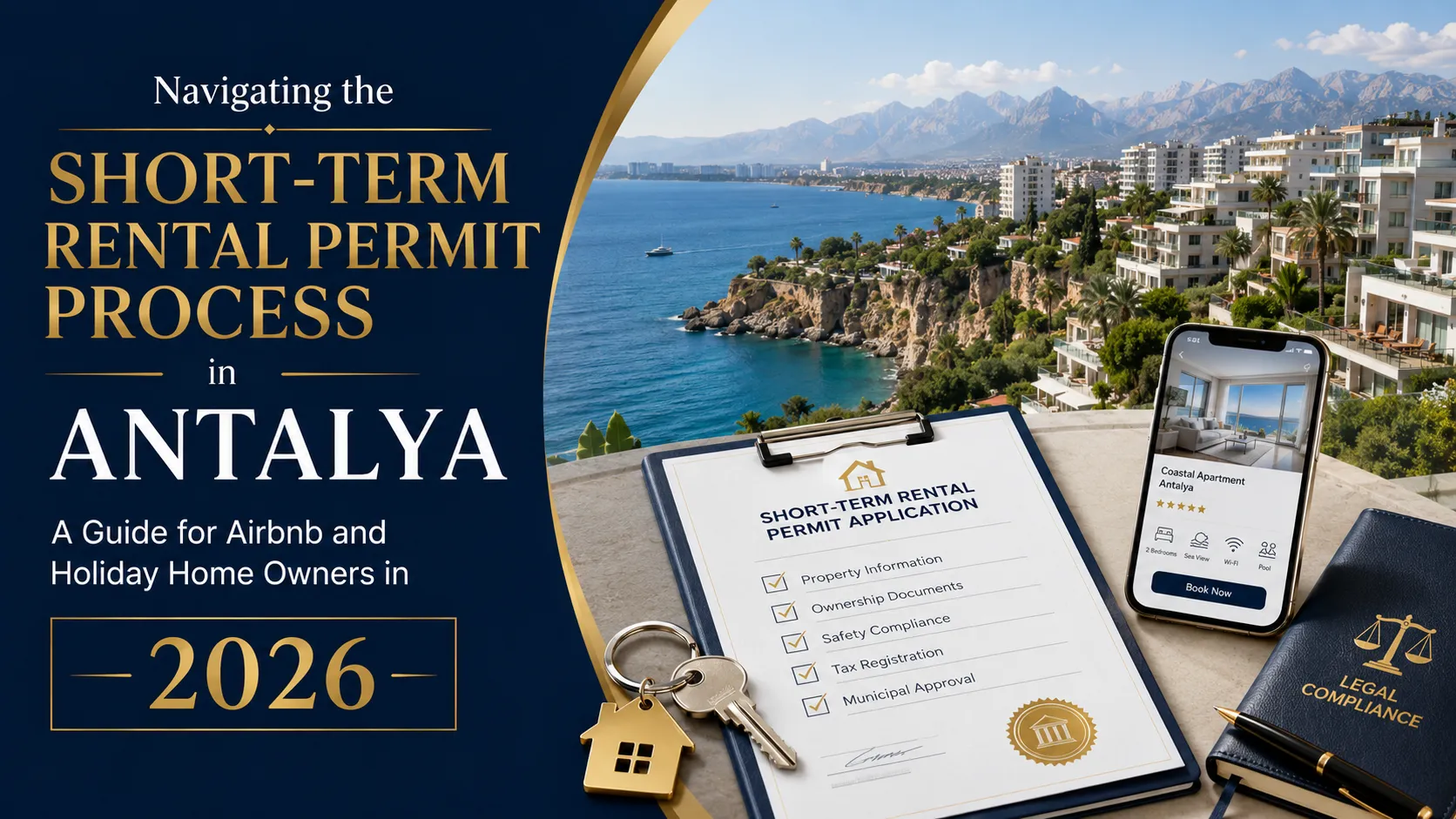
Navigating the Short-Term Rental Permit Process in Antalya: A Guide for Airbnb and Holiday Home Owners in 2026
Introduction to Short-Term Rentals in Antalya
Antalya, known for its stunning coastline and rich historical heritage, has increasingly become a focal point for short-term rentals, particularly in the wake of rising tourism. This growth has been significantly influenced by the emergence of platforms like Airbnb, which have transformed the landscape of accommodations in the region. In recent years, the popularity of short-term rental properties has surged, due in part to the flexibility and unique experiences they offer to travelers compared to traditional hotels.
The demand for short-term rentals in Antalya not only highlights the city’s attractiveness as a tourist destination but also underscores the critical need for regulatory measures to ensure compliance with local laws. The introduction of regulations surrounding short-term rental permits is a response to this rapidly expanding market. Legal services in Antalya are becoming increasingly essential to assist property owners in navigating these regulations, particularly as they relate to acquiring necessary permits such as the tourism rental permit. Such permits help to ensure that short-term rentals meet safety and quality standards, which are vital for protecting both guests and property owners.
The regulation landscape includes several specifications, particularly the 100-day rental law in Turkey, which limits the duration for which properties can be rented out to tourists. Compliance with these regulations is crucial for Airbnb and holiday home owners who aim to maintain their operations legally. Furthermore, seeking the advice of an Airbnb lawyer in Turkey can facilitate a clearer understanding of one’s rights and obligations in this complex environment. As the popularity of short-term rentals continues to grow, the necessity for regulatory frameworks becomes increasingly evident, emphasizing the importance for owners to integrate proper legal guidance into their rental strategies.
Understanding Local Regulations for Short-Term Rentals
Short-term rental properties have gained significant popularity in Antalya, particularly with platforms such as Airbnb. However, alongside this growth, local authorities have implemented various regulations governing legal services in Antalya. This legislative framework aims to ensure the safety, quality, and compliance of rental properties within the region, addressing concerns both from residents and the local tourism sector.
One of the primary requirements for operating a short-term rental in Antalya is acquiring a tourism rental permit. This permit is essential for renting properties on a short-term basis and ensures that landlords meet specific safety and hygiene standards. Consequently, it is critical for property owners to familiarize themselves with the short-term rental permit Turkey regulations, as non-compliance can lead to substantial penalties, including fines or the potential revocation of rental rights.
Each municipality within Antalya may have its own set of regulations, which can affect the terms and conditions surrounding short-term rentals. Additionally, information such as the recently enacted 100-day rental law Turkey imposes limitations on how many days a property can be rented out without a proper license. Failure to adhere to these local laws may not only result in legal ramifications but could also create hurdles for Airbnb owners who wish to operate their business sustainably and profitably.
Moreover, it is advisable for property owners to seek guidance from an experienced Airbnb lawyer in Turkey. Such professionals can provide valuable insights into local laws and assist in navigating the complexities of the permit application process. By ensuring full compliance with local regulations, short-term rental owners can contribute positively to the local economy while avoiding unnecessary legal challenges.
The Short-Term Rental Permit: An Overview
In Antalya, the rapid expansion of the tourism industry has made the short-term rental market a lucrative opportunity for property owners. However, operating a vacation rental, such as those listed on platforms like Airbnb, requires compliance with specific regulations, namely obtaining a short-term rental permit (STR permit). This permit is essential not only for legal compliance but also for ensuring a smooth and safe experience for both hosts and guests.
The inception of the short-term rental permit requirement stemmed from the local government’s need to regulate this growing sector, thus establishing clear guidelines for property owners. By mandating the STR permit, authorities aim to maintain the quality of tourism in Antalya, addressing concerns such as inadequate quality standards, noise complaints, and the impact of rentals on local neighborhoods. The STR permit allows for a more organized oversight of properties, ensuring that they meet safety and hygiene standards suitable for visitors.
For property owners, acquiring a short-term rental permit in Antalya is a crucial step that enhances their credibility as hosts. It serves as proof that they adhere to the legal services in Antalya pertinent to short-term rentals. Moreover, having this permit can attract more guests, as travelers are increasingly looking for accommodations that comply with local laws and regulations, particularly when laws, such as the 100-day rental law in Turkey, dictate specific usage limits for properties listed as short-term rentals.
On the other hand, guests benefit from the existence of this permit. A registered Airbnb lawyer in Turkey can assist hosts in navigating legal complexities, ensuring that the property adheres to regulations, which ultimately creates a safer and more reliable lodging experience for visitors. Overall, the introduction of the short-term rental permit is a pivotal aspect of Antalya’s effort to enhance its tourism appeal while balancing the needs of residents and travelers alike.
Eligibility Criteria for Obtaining a Short-Term Rental Permit
To successfully obtain a short-term rental permit in Antalya, property owners must meet several eligibility criteria set forth by local authorities. Firstly, the individual applying for the permit must legally own the property in question. This necessitates providing proof of ownership, such as a title deed or a notarized sales contract. The property must also be situated within an area designated for tourism and must comply with local zoning regulations.
Another essential requirement is that the property must meet specific safety and welfare standards. This includes having all necessary utilities, such as water and electricity, fully operational. Additionally, owners are often required to ensure that the property has essential safety features in place, including fire extinguishers, smoke detectors, and first aid kits. Moreover, the property must adhere to building regulations and must be maintained in a good condition without any structural issues that could endanger renters.
Furthermore, the conditions for obtaining a tourism rental permit in Antalya may differ slightly based on the property type. For instance, apartments and villas may have unique specifications regarding size, furnishings, and facilities. In certain cases, properties may need to meet certain accessibility standards to accommodate all guests. Additionally, property owners should ensure compliance with the 100-day rental law in Turkey, which limits the number of rental days during peak tourist seasons, ensuring fair use of short-term rental permits.
Lastly, it is highly advisable for property owners to consult with an Airbnb lawyer in Turkey, who can provide guidance on the legal requirements and navigate the permit application process effectively. This legal advice is crucial to avoid potential pitfalls and ensure a smooth transition into the short-term rental market.
Step-by-Step Guide to Application Process
Obtaining a short-term rental permit in Antalya is a crucial step for Airbnb and holiday home owners looking to comply with local regulations and enhance their rental operations. The process involves several key steps, which are outlined below to ensure a smooth application experience.
First, applicants must gather the required documents. This typically includes proof of ownership or lease agreement, a valid identification document, and proof of habitation. Additionally, insurance documentation and any relevant tax certificates may also be necessary. Consulting with a qualified airbnb lawyer in Turkey can help clarify any specific requirements and ensure all documents are correctly prepared.
Once the documents are collected, the next step is to submit the application. Applications for the tourism rental permit are usually submitted to the local municipality or relevant tourism office. It is advisable to check the specific submission guidelines for Antalya, as each municipality may have different preferences for digital submissions or in-person applications.
After submission, applicants can expect varying processing times for their short-term rental permit, depending on the volume of applications being handled by the city. It is reasonable to anticipate a timeline of three to six weeks from submission to receiving approval. However, this timeframe can be influenced by the completeness of the application and any requested clarifications by the authorities.
During this waiting period, it may be beneficial for owners to familiarize themselves with the 100-day rental law in Turkey and other regulations that may affect their operations. Understanding these laws can help operators adapt their business practices accordingly while awaiting the permit.
In conclusion, applying for a short-term rental permit in Antalya requires careful attention to detail and understanding of local regulations. Ensuring that all required documents are prepared and submitted correctly will greatly streamline the process and enhance the likelihood of a successful application.
Costs and Fees Associated with the Permit
Obtaining a short-term rental permit in Antalya involves various costs that property owners must consider to ensure compliance with local regulations. The initial application fee is a primary expense; this fee can vary based on the property type and location but is typically in the range of a few thousand Turkish Lira. It is advisable for property owners to check with the local municipal office for the exact amount as the fees may be subject to change.
In addition to the initial application fee, property owners should anticipate renewal costs for their short-term rental permit. The renewal fees often mirror the application fees, necessitating annual budgeting for these expenses to ensure their property remains compliant under the 100-day rental law in Turkey.
Furthermore, owners should be mindful of any additional financial considerations that could arise during the permit process. For example, costs associated with documentation such as property inspections, legal fees incurred while consulting with an Airbnb lawyer in Turkey, and any necessary adaptations to meet tourism rental permit standards can add up quickly. Property owners may find it beneficial to consult with a legal expert who specializes in legal services in Antalya, especially if they foresee complications in their application process. By understanding the full scope of costs including potential legal fees for assistance, property owners can better prepare financially for their short-term rental business.
Clearly comprehending these costs is vital for anyone looking to navigate the short-term rental permit process effectively. A comprehensive approach will not only help in obtaining the necessary permits but also ensure compliance with local laws, ultimately leading to a more successful rental experience.
Common Challenges and Solutions During the Application Process
Applying for a short-term rental permit in Antalya presents several challenges for property owners. One of the primary difficulties arises from the bureaucratic procedures that must be navigated in order to obtain the necessary approvals for operating a rental property. Many applicants find the documentation process tedious, and the requirements often vary depending on the local regulations in place. This variability can lead to confusion and delays in securing permits.
Additionally, understanding the legality of short-term rentals under Turkey’s 100-day rental law can further complicate the application process. Property owners may struggle to ascertain how these laws apply to their specific situations, particularly regarding compliance with zoning and safety regulations. Moreover, there are frequent changes in legislation that can affect the availability of short-term rental permits.
To confront these challenges, property owners should first ensure they are well-informed about the legal services in Antalya that specialize in short-term rentals. Engaging an Airbnb lawyer in Turkey can provide critical assistance in interpreting laws and avoiding common pitfalls. These professionals can guide applicants through the specifics of obtaining a tourism rental permit and help assemble a complete application that meets all legal requirements.
Moreover, property owners should maintain open lines of communication with local authorities. Requesting clarification on any ambiguous aspects of the application process can reduce the risk of missteps. Leveraging online resources, including community forums where other short-term rental owners share their experiences, can offer valuable insights and practical tips on overcoming bureaucratic hurdles.
By planning the application well in advance and seeking appropriate legal counsel, property owners can significantly increase their chances of a successful application for a short-term rental permit in Turkey.
Best Practices for Compliant Short-Term Rentals
In recent years, the boom in short-term rental services like Airbnb has transformed the hospitality landscape in Antalya. However, successfully navigating the legal requirements to operate a compliant short-term rental operation necessitates adherence to best practices. Safety standards are a top priority that should be enforced rigorously. It is essential for property owners to ensure that their rental units comply with local safety regulations. This includes installing smoke detectors, providing first aid kits, and keeping emergency exits clearly marked. Regular inspections can help identify any safety hazards, thereby protecting both guests and property owners from potential liabilities.
Guest regulations also play a crucial role in maintaining compliance. As an owner, it is advisable to familiarize yourself with the current legal standards governing short-term rentals in Turkey. As far as the 100-day rental law in Turkey is concerned, it is important to remain abreast of limitations regarding the duration of guest stays. Properly communicating these rules to guests can help foster a respectful and cooperative atmosphere, minimizing the chances of misunderstandings. Additionally, providing a comprehensive guest manual will not only inform guests about the rules but also enhance their stay.
Maintaining good relations with neighbors and local authorities is equally crucial. Ensuring open lines of communication can alleviate potential conflicts and garner support from the local community. Consider introducing yourself to neighboring residents and addressing any potential concerns upfront. Moreover, being transparent with local authorities regarding your short-term rental operations will help ensure compliance and possibly expedite the approval process for necessary permits, such as the tourism rental permit. By adhering to these best practices, property owners can cultivate a positive image and contribute to a responsible rental market in Antalya.
Conclusion and Future Outlook for Short-Term Rentals in Antalya
As we navigate the complexities of the short-term rental landscape in Antalya, it is evident that understanding the process of obtaining the necessary legal services is essential for property owners seeking rental success. With the increasing popularity of platforms such as Airbnb, the influx of visitors to Antalya demands a structured approach to managing these rentals, ensuring compliance with local regulations.
The key aspects discussed throughout this guide include the necessary legal services related to securing a short-term rental permit in Turkey. The evolution of laws associated with tourism rental permits and the recent implementation of the 100-day rental law in Turkey underscore the importance of staying informed and adaptable. Property owners are encouraged to consult with an Airbnb lawyer in Turkey, who can provide expert guidance tailored to their specific rental situations, thereby simplifying legal processes and enhancing compliance.
Looking ahead, it is crucial for property owners to monitor the ever-evolving regulatory landscape concerning short-term rentals. As local authorities may adjust regulations in response to tourism trends and market demands, staying abreast of these changes can be vital. The future may also see an increased emphasis on sustainability and responsible tourism practices, which could shape tenants’ expectations and influence rental models. Moreover, as the competitive environment intensifies, property owners may need to innovate their offerings and consider unique marketing strategies to attract guests.
In conclusion, while the challenges in securing a tourism rental permit in Antalya may seem daunting, the necessary steps can be navigated successfully with the right resources and legal assistance. By prioritizing compliance and anticipating future trends, property owners can position themselves advantageously in this dynamic market while fostering a positive experience for both their guests and the local community.


 EN
EN  FR
FR  NL
NL
k777game
26/08/2026The variety of games is just insane. I spent the whole weekend exploring and I am still not bored. k777game is definitely my new favorite spot.
kr7luckcasino
26/08/2026Feeling lucky today! Just won a big prize and the process to claim it was effortless. Big thanks to kr7luckcasino for the great service.
megapari
27/08/2026[3403]Megapari Official Login বাংলাদেশ | বিকাশ পেমেন্ট ও সেরা বোনাস,megapari অ্যাপ ডাউনলোড করে উপভোগ করুন সেরা অনলাইন ক্যাসিনো বোনাস। বিকাশ দিয়ে সহজ পেমেন্ট এবং দ্রুত টাকা তোলার সুবিধা পান। আজই জয়েন করুন। visit: megapari
piggybet
28/08/2026[8634]piggybet Official Login | বিকাশ দিয়ে অনলাইন ক্যাসিনো গেম খেলুন,piggybet অ্যাপ ডাউনলোড করে সেরা স্লট গেম খেলার নিয়ম জানুন। বিকাশ দিয়ে সহজে লেনদেন করে আজই আপনার অ্যাকাউন্ট খুলুন এবং গেম শুরু করুন। visit: piggybet
idrajamania
28/08/2026Honestly, the game selection here is top notch. I had a great run last night and the support team was super helpful with my deposit. Check out idrajamania
phplaytime
01/09/2026Perfect for passing the time and winning some extra cash. The local vibe is great and it’s very user friendly. Love phplaytime!
turbo128
05/09/2026[6090]Turbo128: Login Resmi & Link Alternatif Slot Gacor Terpercaya,Turbo128 menyediakan akses link alternatif terbaru untuk main slot gacor hari ini. Daftar casino online terpercaya dan nikmati kemudahan deposit via dana. Gabung sekarang! visit: turbo128
idbosdolar
07/09/2026Finally found a place where I can actually win. The odds are fair and the variety of games is impressive. Big shoutout to idbosdolar.