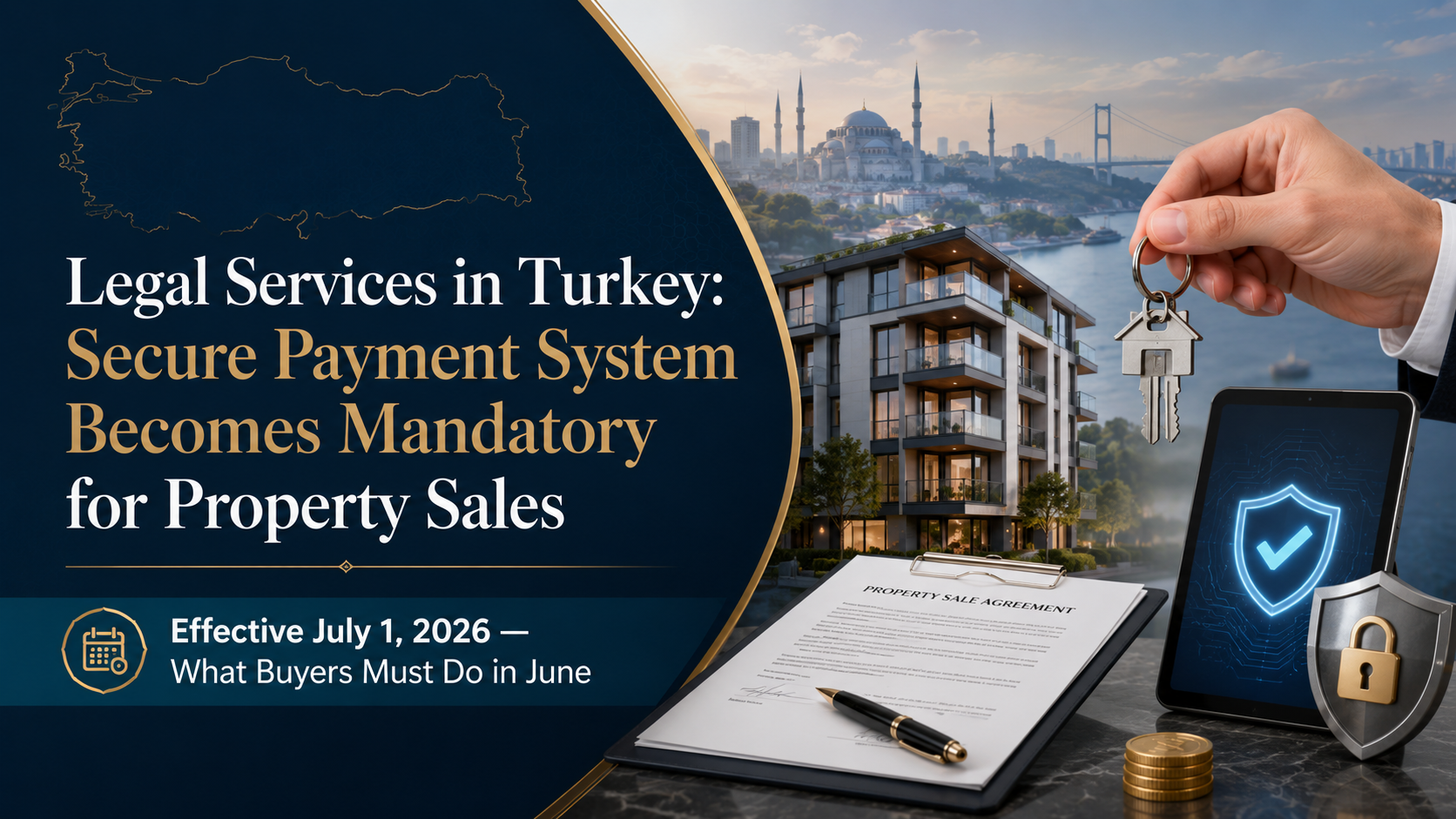
Understanding the New Mandatory Secure Payment System for Property Sales in Turkey
Introduction to the New Regulation
On July 1, 2026, Turkey will implement a new mandatory secure payment system for all property sales, marking a significant milestone in the country’s real estate sector. This regulation has been introduced with the primary aim of enhancing security and transparency in transactions, which are often fraught with risks and fraud. The secure payment system is expected to revolutionize the way legal services in Turkey are conducted during property transactions, offering a more structured and reliable approach for buyers and sellers alike.
One of the critical elements of this new regulation is the establishment of a central platform designed for secure transactions. By facilitating a secure payment method, stakeholders involved in property sales can mitigate the risks associated with financial fraud. This move aligns with the government’s ongoing efforts to improve the integrity of the real estate market and protect consumers from potential financial malpractice. The secure payment system will serve as a linchpin in overseeing the property sale escrow process, ensuring that funds are safely held until all conditions of the sale are met.
Moreover, an essential component of this regulation is its integration with various governmental mechanisms, including oversight by the Ministry of Trade. This collaboration will help maintain a higher level of scrutiny on transactions, effectively reducing incidences of property-related fraud. Participants in the real estate market, including buyers and sellers, will now have greater confidence in the processes leading to title deed transfers, knowing that the new framework is designed to safeguard their interests.
As we approach the implementation date, the impact of the new mandatory secure payment system for property sales in Turkey will become increasingly evident, facilitating smoother transactions and reinforcing consumer protection through legal services. In essence, this regulation signifies a transformative step toward a more secure and trustworthy property market.
Background of Property Sales in Turkey
The real estate market in Turkey has undergone significant transformations over the past few decades, shaped by the country’s economic dynamics and legal frameworks. Historically, property sales in Turkey relied heavily on informal payment methods, often lacking the security measures needed to protect both buyers and sellers. These practices frequently led to disputes over ownership and financial transactions, underscoring a necessity for reform within the sector.
In earlier years, transactions were often executed in cash or through bank transfers that did not involve any formal escrow services. This lack of a structured payment system predisposed the market to various issues such as fraud, misrepresentation, and difficulties in title deed transfer. Buyers were left vulnerable to scams, which affected the confidence of both domestic and international investors in the Turkish real estate market.
Recognizing the need for improvement, the Turkish government has implemented measures aimed at increasing transparency and security in property transactions. The introduction of the secure payment system represents a key development in these regulatory efforts, aligning with international standards for property sales. This new framework not only facilitates the payment process but also enhances fraud prevention mechanisms, thereby instilling confidence among buyers and sellers alike.
The Ministry of Trade has played a pivotal role in overseeing these new regulations, ensuring that legal services in Turkey adapt to the evolving landscape of real estate transactions. By mandating a secure payment system, the regulatory body aims to safeguard transactions and support a smoother property sale process. As stakeholders navigate through this transitional period, it is evident that the focus on secure payment practices will address many of the challenges previously faced within the Turkish property market.
Understanding the Secure Payment System
The new mandatory secure payment system for property sales in Turkey is designed to enhance the safety and transparency of real estate transactions. This system is a crucial step towards reducing fraud and ensuring that both buyers and sellers can engage in property sale transactions with confidence. It integrates a secure payment mechanism that minimizes risks associated with traditional methods.
Central to the operation of this secure payment system is its technical infrastructure, which includes advanced encryption and verification protocols. When a property sale is initiated, a secure escrow account is created, ensuring that funds are held safely until all conditions of the sale are met. This escrow mechanism plays a vital role in property sale transactions in Turkey, acting as a third-party intermediary that protects the interests of all involved parties.
Various stakeholders play an essential role in facilitating these secure transactions. The Turkish banks are required to implement the secure payment system, ensuring that all monetary exchanges are conducted through authenticated and secure channels. Real estate agents contribute by guiding clients through the process, offering insights into the secure payment procedures and helping buyers and sellers understand their rights and obligations. Additionally, government agencies, including the Ministry of Trade, oversee the implementation of this system to ensure compliance and promote fair practices across the property market.
This robust collaboration among banks, real estate professionals, and governmental bodies not only fosters a secure environment for property transactions but also aids in fraud prevention. By establishing clearly defined roles and processes, the secure payment system represents a significant advancement in the legal services landscape in Turkey, ultimately promoting a more stable and trustworthy real estate market.
Timeline and Key Dates to Remember
The implementation of the mandatory secure payment system for property sales in Turkey represents a significant change designed to enhance legal services in Turkey and prevent fraud in real estate transactions. A clear timeline is essential for buyers to understand when certain actions must be taken to ensure compliance with this new requirement.
Firstly, it is crucial to note that all property sales must transition to this secure payment system by June 2026. This deadline mandates that every buyer and seller must adopt this system for the facilitation of payments, thereby promoting transparency and safety in transactions. Buyers should prepare for this shift by familiarizing themselves with the secure payment mechanisms that will be mandated by the Ministry of Trade.
As a part of the preparation process, potential property buyers should start gathering necessary documentation related to their intended purchases, which will facilitate the smooth integration of the legal services involved in property sale escrow. This includes ensuring that the title deed transfer is executed correctly and that all legal prerequisites are met well in advance of the deadline.
Moreover, it is advisable for buyers to engage with real estate professionals who are well-versed in the new legal framework, ensuring that their transactions adhere to the regulations set forth. This proactive approach will not only ease the process but will also safeguard against potential delays in the payment and transfer processes.
Overall, with a structured timeline leading to June 2026, buyers can navigate the transition towards the secure payment system in Turkey effectively. It is essential for all stakeholders involved in property sales to remain informed about these developments to benefit from the enhanced security measures introduced in the market.
What Buyers Must Do in June 2026
The introduction of a mandatory secure payment system in Turkey is set to significantly alter the landscape of property sales. As the enforcement date approaches in June 2026, it is imperative for buyers to familiarize themselves with the requisite steps to ensure a smooth transaction. Understanding these steps will aid in compliance with the new regulations and enhance the overall purchasing experience.
First and foremost, prospective buyers must establish a local bank account. This account will be essential not only for engaging in real estate transactions but also for facilitating the secure payment system mandated by legal services in Turkey. It is advisable to choose a bank that specializes in real estate financing or has a robust understanding of the property market, as they could provide valuable guidance through the payment process.
Next, buyers should gather all necessary documentation to prove their identity and sources of funds. Documentation typically includes a valid passport, proof of income, and possibly financial statements. This step is crucial, given the emphasis on fraud prevention within the new regulations. Ensuring complete and accurate documentation will streamline the title deed transfer, especially when coupled with proper legal services related to property sales.
Once the necessary bank account is set up and documentation is in order, it is pertinent for buyers to understand the procedures related to the secure payment system. Having a thorough understanding of the payment flow and the role of the escrow account in property transactions can prevent any misunderstandings during title deed transfers.
Furthermore, engaging with legal services specializing in property sales can provide clarity about the new regulations and assist buyers through each step of the process. Engaging knowledgeable professionals can not only ensure compliance but also enhance the security of the transaction, facilitating a seamless transfer of property ownership.
Benefits of the Secure Payment System
The implementation of the mandatory secure payment system in Turkey brings forth numerous benefits for stakeholders involved in property transactions, including both buyers and sellers. First and foremost, it significantly enhances security throughout the transaction process. Previously, buyers and sellers often faced risks associated with cash transactions or traditional payment methods, which could lead to potential fraud or misappropriation of funds. The new legal framework provides a reliable platform that safeguards against such occurrences by facilitating transactions through verified channels.
Moreover, the secure payment system plays a vital role in reducing the risk of fraud, a prevalent concern in real estate dealings. With the involvement of a legitimate escrow service, funds can be held securely until all legal and administrative conditions are confirmed, leading to a trustworthy transaction environment. This escrow mechanism is particularly important in ensuring that property sale escrow agreements are honored, and that all arrangements regarding the transfer of ownership, including title deed transfer, are legitimately conducted.
Another notable advantage is the improvement in transparency associated with property sales in Turkey. The secure system allows for better tracking and documentation of transactions, providing all parties involved with clear records of payments and terms agreed upon. This transparency not only fosters trust among buyers and sellers but also aligns with the objectives of the Ministry of Trade aimed at establishing fair practices in the marketplace.
Additionally, the integration of a secure payment system helps bolster compliance with legal standards, thereby reinforcing the integrity of property transactions in Turkey. Overall, the introduction of this system significantly enhances the overall efficiency, security, and legality of property sales, benefiting all participants involved and contributing to a more stable real estate market.
Potential Challenges and Considerations
The introduction of the new mandatory secure payment system for property sales in Turkey presents several challenges and considerations for buyers and sellers. One of the primary hurdles is the varying levels of technological literacy among the population. Many individuals involved in property transactions may not be well-versed in digital payment systems and online banking. This lack of familiarity can cause delays and potential errors during the property sale process, particularly when handling secure payment systems that require a certain level of comfort with technology.
Another significant consideration is access to banking services. While urban areas may enjoy robust banking infrastructure and digital payment options, rural regions of Turkey may face limitations in this regard. Buyers in these areas could encounter difficulties in utilizing the secure payment system effectively, which could jeopardize their ability to complete property transactions smoothly. Without the availability of local banks or internet services, the transition to this new system may be particularly challenging.
Moreover, adapting to new procedures can also be daunting for individuals who are accustomed to traditional methods of handling property sales. The legal services in Turkey rely heavily on established practices, and any significant change necessitates a period of adjustment. Buyers might find themselves overwhelmed by the new documentation required for title deed transfer, ensuring compliance with the Ministry of Trade regulations, and understanding how to engage with property sale escrow arrangements.
In navigating these challenges, it remains crucial for all parties engaged in the property market to seek professional legal services. Such guidance can play a vital role in facilitating a smooth transition to the mandatory secure payment system and ensuring compliance with local laws aimed at fraud prevention, ultimately safeguarding the interests of all stakeholders involved in property sales.
Expert Opinions and Industry Reactions
The implementation of the mandatory secure payment system for property sales in Turkey has elicited a wide range of responses from professionals in real estate, legal services, and economics. Many experts view this new requirement as a pivotal step in enhancing trust and transparency within the Turkish property market. According to a renowned real estate consultant, the secure payment system is expected to reduce instances of fraud, thereby providing a safer environment for both buyers and sellers. This measure is particularly critical in a nation where property transactions have historically been vulnerable to various forms of deception.
Legal advisors emphasize that the secure payment system aligns well with the Ministry of Trade’s ongoing efforts to streamline property transactions, particularly regarding title deed transfer and property sale escrow. By requiring all payments to be processed through a secure platform, the likelihood of disputes arising after the sale is significantly minimized. An experienced legal practitioner noted that this regulation underscores the necessity of legal services in Turkey, particularly in navigating the complexities that come with property acquisitions.
Furthermore, economists suggest that this move may bolster foreign investment in Turkish real estate. With an increase in the perception of safety and reliability in property transactions, international investors may be more inclined to engage with the Turkish market. This perception can potentially lead to a surge in demand, stimulating economic growth in the sector. As one economist articulated, the introduction of a secure payment system could serve as a catalyst for broader improvements in the market structure.
Collectively, these insights highlight a prevailing optimism regarding the new secure payment system. The expectations are that, while initial adjustments may present challenges, the long-term benefits in fraud prevention and market transparency will position Turkey as a more attractive destination for property investment.
Conclusion and Future Outlook
The new mandatory secure payment system for property sales in Turkey represents a significant shift in the realm of real estate transactions. This initiative has been introduced to enhance transparency, trust, and safety in real estate dealings, addressing many of the loopholes that previously facilitated fraudulent activities. Importantly, by mandating an escrow system, it ensures that funds are securely handled during property transfers, minimizing risks for both buyers and sellers.
Legal services in Turkey are adapting to this change, as practitioners and real estate professionals seek to navigate the evolving landscape. The integration of a secure payment system not only aids in fraud prevention but also aligns with the Ministry of Trade’s objectives of fostering economic stability and consumer protection. As this infrastructure becomes mainstream, clients will increasingly look for legal services that can seamlessly incorporate these protocols into their property transactions.
Looking forward, it is essential for all stakeholders—buyers, sellers, real estate developers, and legal advisors—to stay informed about future developments surrounding this system. The government is expected to continually refine the processes associated with title deed transfers and enhance the legal frameworks that govern property sales. As the market matures, we may witness improvements in the efficiency of property transactions, driven by technological advancements and regulatory changes.
For individuals engaging in real estate in Turkey, being proactive is crucial. Understanding how to leverage the secure payment system can facilitate smoother transactions and help solidify trust in dealings with various parties involved. As these systems evolve, remaining proactive and informed will empower buyers and sellers to make sound decisions and ensure that their investments are protected in a rapidly changing real estate landscape.


 EN
EN  FR
FR  NL
NL
pkdadabet247
21/08/2026Total 24/7 availability is exactly what I need. No matter the time, I can always get into my account and play. Big thanks to pkdadabet247 for the reliability.
vn28betcom
21/08/2026The odds are great and the withdrawal process is surprisingly fast. I feel very secure playing on vn28betcom.
tayaphcasino
21/08/2026Best gaming site in the region for sure. Everything is localized and works perfectly on mobile. Cheers to tayaphcasino for the great experience.
vnxn88com
28/08/2026I love how intuitive the navigation is. Even for a beginner, it is very easy to get around and start playing. Great vibes all around at vnxn88com.
jljl555slot
29/08/2026Simply the best slot site I have used this year. The jackpot hits are frequent at jljl555slot and it feels very rewarding.
ph99jl
31/08/2026Really impressed with the customer service here. They helped me resolve my deposit issue in minutes. ph99jl is definitely one of the most trustworthy platforms I have tried.
juragan88slot
09/09/2026The jackpot hits here are actually legit. I had a great run last night and the withdrawal was surprisingly fast. Highly recommend juragan88slot to all slot lovers!
ph777richjili
15/09/2026I hit a decent jackpot here last week and the money hit my account almost instantly. This is where the real action is. Visit ph777richjili
phpub7774
16/09/2026Honestly the best experience I’ve had recently. The layout is intuitive and the content is top notch. Keep up the great work guys! phpub7774
ph32jili
16/09/2026The slot games here are amazing and the jackpots are actually reachable. I had a great run yesterday on ph32jili.
powerbet
18/09/2026Living in Nigeria I always struggle to find a site that truly delivers on time but this one changed my routine completely. Deposits go through instantly and I never worry about my funds being stuck anywhere. The live games are incredibly smooth and the hosts are so friendly. I am truly grateful for this platform. powerbet
bdak777
21/09/2026The jackpot opportunities here are insane. I’ve tried many sites but the vibe at bdak777 is just different and more rewarding.
pleypixcasino
23/09/2026Best rewards system I have encountered in a long time. It actually feels like they value their loyal players. Visit pleypixcasino soon.
ca777game
25/09/2026Such an exciting place to play! I love the thrill of the jackpots and the community vibe is great. My go-to site is ca777game
pasar88
27/09/2026[70]Pasar88: Login Daftar Akun Slot Gacor Dana dan Casino Online,pasar88 menyediakan akses login dan daftar akun mudah. Nikmati slot gacor dana 5rb serta casino online deposit pulsa. Ayo bergabung dan main sekarang! visit: pasar88
gt9999
28/09/2026[4697]gt9999 login ph – legit online slots gamit ang GCash,Gamitin ang gt9999 login ph para sa mabilis na access. Mag-download apk na at tuklasin ang best online casino bonus para sa iyong paglalaro. Sali na! visit: gt9999
kr855win
29/09/2026I have tried a few platforms lately but this one really stands out. The interface is smooth and the payouts are surprisingly fast. Definitely worth a try for anyone looking for a reliable spot. Check out kr855win for a great experience.
3slotphp
03/10/2026I’ve tried a few sites lately but this one is surprisingly smooth. The payout process is quick and I really enjoy the variety of games here. Definitely recommend checking out 3slotphp if you want a hassle-free experience.
vnf168win
05/10/2026Everything about this site feels professional and secure. I can focus on my strategy without worrying about technical glitches. Big thumbs up for vnf168win.