Opérer en Turquie en tant qu'entreprise étrangère : Succursale ou Bureau de liaison
Introduction to Operating in Turkey as a Foreign Company
Turkey has emerge as an attractive destination for foreign companies seeking to expand their operations. With its strategic location bridging Europe and Asia, Turkey provides an unparalleled access to diverse markets and a large consumer base. The country’s economic landscape shows promising growth, making it particularly appealing for foreign investments. Furthermore, a rich cultural heritage and a dynamic workforce add to the attractiveness of operating in Turkey.
The regulatory environment in Turkey has improved significantly over the years, with various governmental incentives in place to facilitate foreign business operations. Foreign companies can choose from various structures, with branch offices and liaison offices being the primary options for establishing a presence in the country. Understanding these structures and their implications is crucial for any foreign enterprise looking to set up in Turkey.
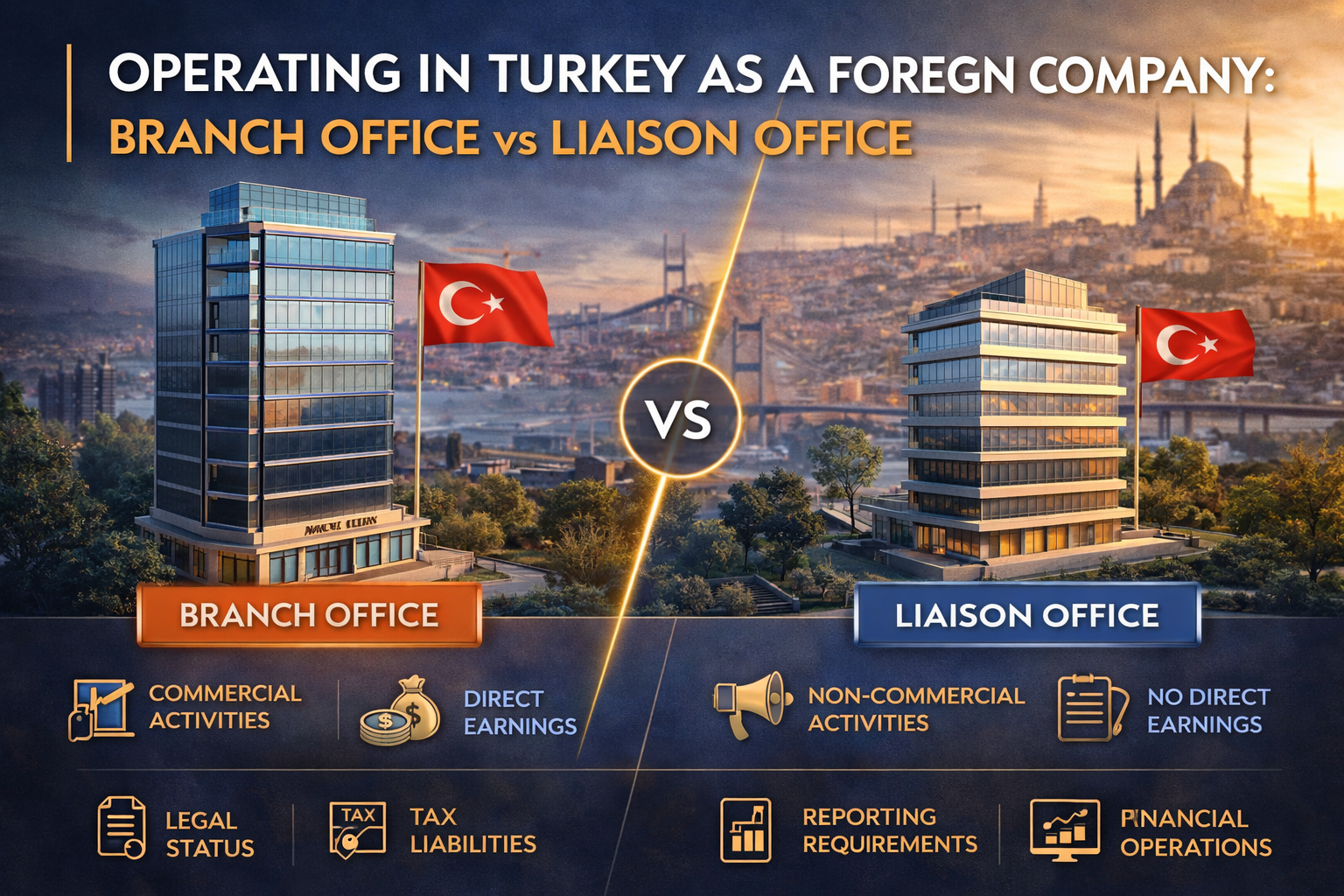
Branch offices allow foreign companies to engage directly in commercial activities, with the ability to conduct sales, offer services, and carry out their primary business operations. On the other hand, a liaison office serves as a non-commercial representative of the foreign company, primarily focusing on coordinating activities and conducting market research without direct engagement in profit-making activities.
As foreign companies contemplate their journey into the Turkish market, it is vital to understand the liaison office Turkey requirements and the operational features of opening a branch in Turkey. This understanding will streamline the process and ultimately enhance the chance of success in gaining a foothold in this burgeoning market. Exploring the distinctions between a branch and a liaison office establishes the groundwork for determining the best approach to foreign company setup in Turkey.
Understanding Branch Offices in Turkey
A branch office in Turkey serves as an extension of a foreign parent company, enabling it to operate within the Turkish market while preserving its identity and control. Legally, a branch office is not considered as a separate legal entity; rather, it is a representation of the parent company, allowing it to engage directly in business activities in Turkey without the need to establish a separate legal framework.
Branch offices are permitted to undertake various activities that are aligned with the business objectives of the parent company. They are primarily involved in commercial activities such as marketing, sales, and project execution. However, it is essential to note that certain regulatory requirements must be adhered to when setting up a branch office in Turkey, including obtaining the necessary permits and registrations.
One of the most significant advantages of opening a branch in Turkey is the facility of direct market entry. Foreign companies can leverage the local market by establishing a direct presence, which can enhance their visibility and operational efficiency. Unlike a liaison office, which primarily functions for non-commercial activities and market research, a branch office can actively engage in revenue-generating operations, thus integrating itself into the Turkish economy more effectively.
Additionally, establishing a branch office in Turkey allows the foreign company to capitalize on local demand and expand its footprint. While liaison offices are limited in their activities and cannot participate in sales transactions, a branch office enjoys the flexibility to conduct business as per the parent company’s directives. This flexibility significantly enhances a foreign company’s capacity to adapt its strategies to meet the local market’s needs.
Understanding Liaison Offices in Turkey
Liaison offices serve a pivotal role for foreign companies looking to establish a presence in Turkey without directly engaging in business operations. Principally, these offices are designed to facilitate communication and coordination with the Turkish market and do not possess legal status to undertake commercial activities. A liaison office can act as a bridge between the parent company and local stakeholders, enabling smoother communication flow and gathering of market insights.
A foreign company considering the option of opening a liaison office in Turkey must understand the stringent regulations governing these entities. Unlike branch offices, which can execute business transactions, a liaison office is restricted from making sales, entering into contracts, or generating revenue. Its primary function lies in promoting the company’s services and collecting information, ultimately assisting the parent company to form a strategic approach tailored to the Turkish environment.
The requirements for setting up a liaison office in Turkey are relatively straightforward, yet specific. Typically, a foreign company must submit an application to the Ministry of Trade detailing the intended purpose of the liaison office, along with proof of the parent company’s existence. This includes documentation like the parent company’s registration and financial statements. After meets these liaison office turkey requirements, the local authorities may grant approval, allowing the liaison office to operate for an indefinite period, provided it adheres to the prescribed limitations.
In summary, the establishment of a liaison office in Turkey provides foreign companies a way to explore the local market while minimizing operational complexities. By focusing on communication and market research, these offices become invaluable assets for companies seeking to navigate the intricacies of the Turkish business landscape effectively.
Key Differences Between Branch Offices and Liaison Offices
The distinction between a branch office and a liaison office in Turkey is significant, influencing a foreign company’s entry strategy into the Turkish market. The legal status of branch offices permits them to engage in business operations directly, making them an integral part of the parent company. In contrast, liaison offices serve a more limited function and are not allowed to conduct direct business activities.
When considering foreign company setup in Turkey, it is essential to recognize how their permitted activities differ. Branch offices can perform commercial activities and generate profits, while liaison offices primarily engage in activities of an administrative nature, such as market research, promotional activities, and liaison with clients but do not involve in the sale of goods or services.
Another significant differentiator is tax implications. Branch offices are subject to taxation in Turkey on their income, mirroring the obligations of local companies. Conversely, liaison offices are not considered taxable entities as they do not generate income directly, thus aligning their financial responsibilities differently under Turkish law.
Regulatory requirements also vary notably between the two types of entities. Establishing a branch office requires obtaining necessary permits, conducting specific registrations, and meeting certain operational standards. In contrast, liaison office Turkey requirements typically demand less rigour; establishing such an office requires registration with the local authorities but generally involves a simpler process.
In terms of operational capabilities, branch offices benefit from the ability to employ staff, open bank accounts, and execute contracts. This contrasts with liaison offices, which face restrictions on hiring local employees and cannot sign contracts or perform sales activities.
To summarize, the choice between a branch versus liaison office in Turkey depends vastly on the foreign company’s objectives, desired level of operational engagement, and compliance considerations. Understanding these differences is vital for making informed strategic decisions.
Legal Requirements for Establishing Branch and Liaison Offices in Turkey
Establishing a branch or liaison office in Turkey involves navigating a distinct legal framework set by Turkish law. Foreign companies seeking to operate in the Turkish market should be aware of the registration process, required documentation, and compliance obligations that are critical for a successful setup.
When opening a branch in Turkey, foreign entities must first obtain a legal entity status suitable for operations. The process begins with application submission to the Turkish Trade Registry. Necessary documentation generally includes the company’s charter, a letter of authority, and proof of financial stability. It is essential to bear in mind that branches are considered extensions of the parent company and can engage in various business activities, subject to compliance with local regulations.
In contrast, establishing a liaison office in Turkey is a more simplified approach. Liaison office Turkey requirements include the submission of an application detailing the office’s intended purpose, typically to conduct market research or promotional activities. This office does not engage in commercial activities or generate revenue; rather, it serves as a point of communication between the parent company and local stakeholders.
Both branches and liaison offices are required to register with the Turkish tax authorities to comply with tax regulations. This step is critical, as it ensures that the foreign company adheres to local tax laws. Moreover, specific industry regulations may apply to certain sectors, making it imperative for foreign companies in Turkey to consult legal expertise pertaining to their specific business scope.
In conclusion, while the legal requirements for establishing a branch vs liaison office in Turkey differ significantly, understanding the regulations and necessary documentation is vital for successful integration into the Turkish market. Foreign companies must ensure compliance with the procedural requirements to facilitate smooth operations.
Tax Implications for Branch and Liaison Offices
When establishing a foreign company setup in Turkey, understanding the tax obligations for a branch office versus a liaison office is crucial for compliance and financial planning. A branch office in Turkey is deemed a dependent entity of the parent company and engages in activities that can generate taxable income. Consequently, it is subjected to corporate tax at a rate of 20% on its earnings. Furthermore, branch offices are required to comply with value-added tax (VAT), with a standard rate of 18%, applicable to the sale of goods and services.
In contrast, a liaison office operates with significant restrictions. It is not permitted to engage in direct commercial activities or generate taxable income. Instead, the primary function of a liaison office is to facilitate communication and support the business operations of its parent company. Due to its limited operational scope, a liaison office is generally not subjected to corporate tax. However, it must navigate additional requirements pertaining to registration and may incur other indirect taxes.
Potential liabilities associated with both types of offices are essential considerations for foreign companies establishing operations in Turkey. While branch offices may access certain tax deductions and incentives as legal entities, there are additional compliance costs stemming from corporate tax filings and VAT obligations. Conversely, liaison offices may present fewer immediate financial burdens due to exemptions from corporate tax, but they might incur expenses with local registered staff and operational costs related to their administrative roles.
Overall, the choice between opening a branch in Turkey or establishing a liaison office hinges on a company’s operational goals and tax strategy. Assessing these tax implications will aid in making informed decisions conducive to compliance and business success within the Turkish market.
Operational Considerations for Each Office Type
When foreign companies contemplate establishing a presence in Turkey, they often deliberate between opening a branch office and a liaison office. Each office type offers distinct operational frameworks that can significantly influence their effectiveness within the local market.
A branch office, as defined in Turkey, functions as an extension of the parent company and is capable of engaging in commercial activities. This capacity allows the branch to hire local employees directly, which facilitates better integration into the local market. Furthermore, the regulations governing labor laws in Turkey apply to branch offices, necessitating compliance with local hiring practices, employee benefits, and working conditions. Understanding these local labor laws is essential for any business intending to establish a successful branch in Turkey.
In contrast, a liaison office is primarily intended for non-commercial activities, acting more as a communication point between the parent company and local stakeholders. The liaison office cannot engage in income-generating activities or hire local employees directly. This limitation can restrict operational flexibility, as personnel must be expatriates or employees in shared service models, depending on agreement with the local authorities. This operational model supports strategic functions such as market research and networking but lacks the capacity for direct sales or commercial engagements.
Cost considerations also play a vital role in this decision. Branch offices incur greater operational costs due to their need to comply with more complex regulatory requirements, including the need for statutory accounts and tax submissions. Conversely, the lower overheads associated with liaison offices can be appealing, but they come at the expense of operational capabilities.
Ultimately, the choice between establishing a branch vs liaison office in Turkey depends on the specific operational goals of the foreign company. Companies must evaluate their needs to decide which type of setup will best serve their objectives while navigating the intricacies of local regulations and market conditions.
Case Studies: Successful Foreign Companies in Turkey
Turkey has become an attractive destination for foreign companies looking to expand their operations, given its strategic location and growing market. Several notable international enterprises have successfully set up operations in Turkey, both in the form of a branch office and a liaison office. These case studies provide valuable insights into their experiences and strategies when navigating the Turkish business landscape.
One prominent example is the multinational telecommunications company, Vodafone. After establishing a branch office in Turkey, they faced challenges related to navigating local regulations and competition. Vodafone’s approach involved deep local market research, effectively collaborating with local partners, and adapting their international strategies to meet local customer needs. This flexibility enabled them to tap into the Turkish market, ultimately positioning them among the leading telecom providers in the region.
Another case is that of Siemens, a global engineering giant that decided to set up a liaison office in Turkey to explore market conditions and assess local partnerships before committing to a full-scale investment. The liaison office allowed them to engage in market research without the complexities tied to a branch office, thus minimizing operational risks initially. Siemens focused on building relationships with local businesses and understanding the regulatory framework, which played a vital role in their eventual decision to establish a more significant presence in the country.
Both examples illustrate the importance of thorough research and strategic planning when considering foreign company setup in Turkey. By understanding the distinct requirements and operational frameworks for opening a branch in Turkey versus a liaison office, these companies have effectively positioned themselves in the Turkish market. Their experiences serve as instructive lessons for other foreign entities looking to successfully enter Turkey’s dynamic business environment.
Conclusion et recommandations
In concluding our discussion on the differences between a branch office and a liaison office in Turkey, it is essential for foreign companies to carefully evaluate the characteristics and operational scopes of each option. A branch office allows for direct involvement in commercial activities and is subject to local taxation, making it suitable for businesses aiming for a strong market presence. On the other hand, a liaison office serves primarily as a representative entity to facilitate communications and market research, beneficial for companies that wish to explore opportunities without entering the market immediately or engaging in direct sales.
When considering options for foreign company setup in Turkey, the decision should align with the overall strategic goals of the organization. It is advisable to conduct comprehensive market research to understand the potential challenges and advantages in the Turkish business environment. Factors such as the target market, regulatory considerations, and intended operational scale must be at the forefront of any decision regarding opening a branch in Turkey or establishing a liaison office.
Furthermore, liaising with legal and business professionals who specialize in Turkish commercial law and foreign company setups can provide invaluable insights and guidance. They can help navigate the nuances of liaison office Turkey requirements or the regulatory framework surrounding branch offices, ensuring compliance and operational efficiency. Such steps will ultimately contribute to a more informed decision-making process and increase the likelihood of successful operations within Turkey’s dynamic landscape.


 English
  French
  Dutch
Dutch